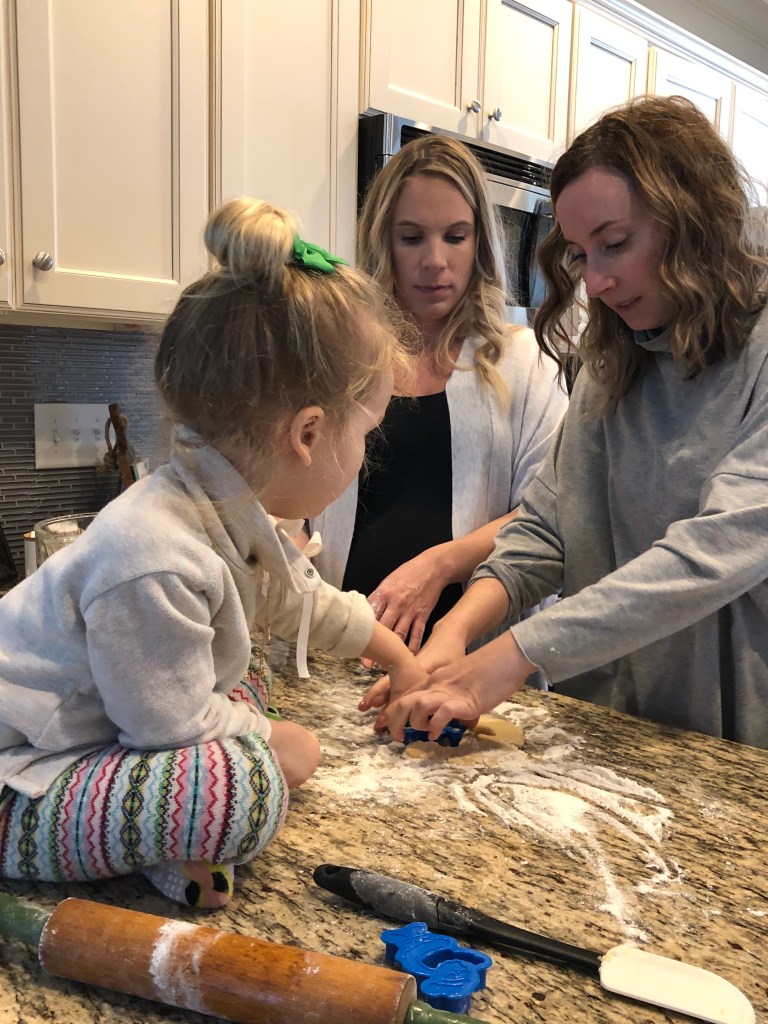
Christmas Eve, 2019. I woke up early and was in a very festive mood already. We’d soon be going to my daughter Lauren’s home to make Christmas cookies, as is now the tradition with my daughters and granddaughters. It’s just me and all of my girls and if I’m honest, I like it that way… The Keurig brews a cup of Starbucks Hazelnut, and I shuffle to the sofa to savor the moment while Jackie sleeps. I launch the Facebook app on my phone and scroll through a litany of Christmas cheer.
My eye settles on a post by old friends – I read it, and then I read it again and again, trying to make sense. An amazing young man that had once spent hours in my home talking and hanging out with my girls, lost a tragic battle with depression, and had succumbed to the often harsh cruelty of this life. The screen is blurred with my tears as I try to comprehend the incomprehensible. This is not my story to tell but it’s a sad and telling piece of a larger connected journey to understanding.

On December 28th, Jackie and I took part in Yoga Mala – a practice of 108 Sun Salutations, or 4 rounds of 27 sun salutations, to say “goodbye” to 2019 and “hello” to 2020. We were asked to write down and reflect on a one-word intention for the new year. The word that came to me was, life. Later in the practice the word now continued to manifest.
January 10th, I attended the memorial service for the father of a client and friend. He passed much to young after a battle with Parkinson’s Disease. On January 26th, 9 people, including Kobe Bryant, died in a helicopter crash. The reverberations of their senseless deaths continue to linger in our consciousness. Mortality comes not only for the old and frail, but for the strong, for the young, for those with so much more to give. Yesterday a dear friend buried his sister who died after an incredibly brief battle with cancer.
Life – Now
I know of a young girl who has struggled bravely with the trials and confusion of adolescence. She once told her dad, “when grandpa died you said that he was in a better place, where there is no more pain, no more tears… why would I not want to be in that place?”. Recently I spoke with a long time coworker who was leaving us to pursue his dreams. I asked him if there was a tipping point that solidified in his mind that he needed to embark on this seismic career shift now. He reflected on the deeply personal loss of a good friend and the declining health of his mom as life markers that beckoned him to take a leap of faith.

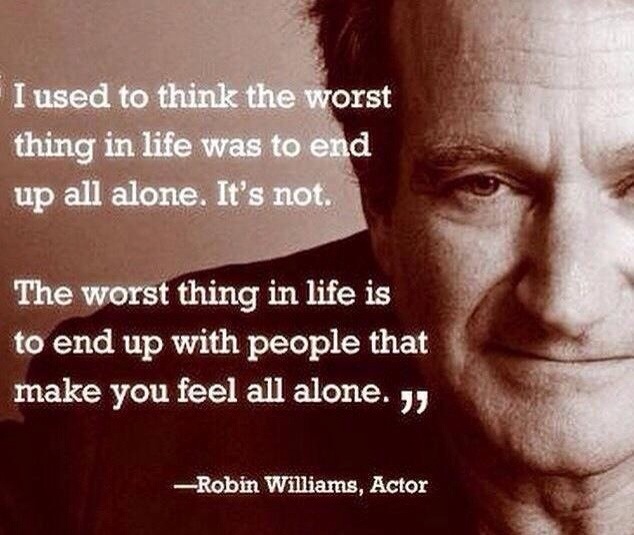
My brother has been diagnosed as having bipolar disorder. That sounds like an all encompassing and identity defining label, and in some ways it has been. There have been regretful moments to be sure, but he is funny, and giving, and writes deep thinking poetic verse. He has lived a beautifully tortured existence. His lifeline to the world are his kids and grandson. He has always been proud of me and likes to introduce me as his baby brother. He taught me to drive by letting me sit on books to see over the steering wheel of his Challenger. He bought me record albums and flannel shirts and my first pair of Chuck Taylors. I’m ashamed to say that I rarely call or check in on him. Somehow I’ve convinced myself that if I can’t have the 18 year old version of him that I admired so much, then I’ll settle for a limited caricature. I wasn’t there those times he tried unsuccessfully to silence the pain permanently. I wasn’t there when he was released from the hospitals. I seldom offered a listening ear when he could not force himself to get up and perform the simplest of tasks. This complicated version of my brother was too easy to ignore – some laughter and good memories mixed in with trauma and what could-have-beens. My extended family has a history fraught with mental health issues like dementia and alzheimers, as well as mental illnesses such as severe depression and debilitating anxiety. My mom was named after her aunt, lovingly referred to as crazy Amy. Maybe it’s my own fear and psychosis that repels me from the ones I should be showing up for. It’s no wonder that one cruel symptom of mental illness is a deep sense of being all alone.
Life – Now
The Christian tradition speaks of two followers of Jesus who played prominent roles in the events leading up to his execution, around AD 30-33. One is revered as a saint, the other as a demon possessed thief and coward. Yet they are both guilty of betrayal. Judas Iscariot is the protagonist of the story. The anti-hero whose rise and fall is said to have been foretold by the prophets: Psalm 41:9 Even my close friend, whom I trusted, he who shared my bread, has lifted up his heel against me. Peter is the bumbling and beloved “every man” who is either making profound statements of faith or conversely showing complete ignorance of the revolutionary development of human consciousness on full display. In the emotionally brutile climatic scene in the Garden of Gethsemane, Judas betrays with a kiss. Peter, in fulfillment of a more recent prophecy from the very lips of Jesus, denies him three times, with a dose of profanity thrown in for street cred.
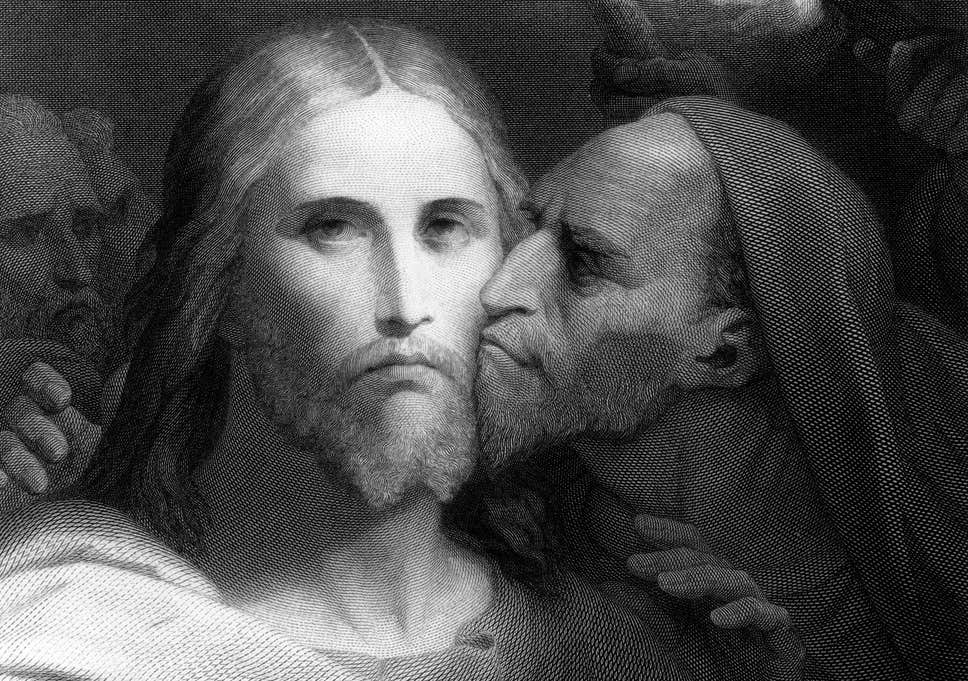
Judas, filled with unbearable guilt, unforgivable shame and unrelenting remorse, finds a tree and does what we all want him to do – kills himself. Serves him right! Good riddance! There’s a special place in hell reserved for him!
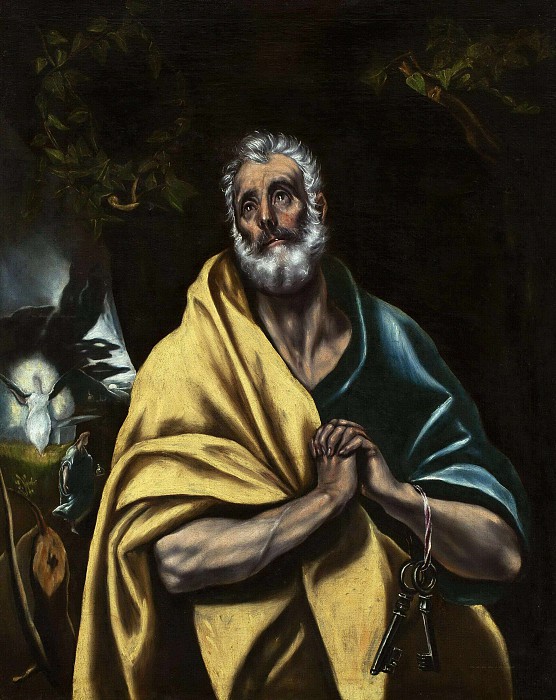
It may be that Peter lacked the courage to take his own life. Or maybe he had seen enough forgiveness on display to hope that there was still some absolution to be found. It could be argued that Judas acted with planned intent whereas Peter responded in the heat of the moment, so their crimes are not equal. Regardless of intent, Peter would always live with the look that Jesus gave him on the third denial. Scripture recounts that they met eyes and Peter ran out and wept bitterly. Unbearable guilt, unforgivable shame, and unrelenting remorse – sounds familiar doesn’t it?
Judas isn’t there for the crucifixion and there is no mention of Peter being there either. All four gospels make note of the disciples who ARE there to hear the dying words of Jesus – most of them are courageous women who have dealt with their guilt, shame, and remorse – and now are free to lean into the unrelenting pain and grief for the one they love.
If Judas and Peter had shown up at Golgotha to face their victim, they would have been utterly shocked to hear Jesus cry out for everyone to hear: “Father forgive them, for they don’t even know what they are doing”. Those words richoched into eternity past from the first incarnation of the Cosmic Christ in creation, and travelled back up to Palestine past the lifeless body of Judas, through the corridors of quantum physics and the 11+ dimensions of super string theory, to the fathomless spectacle of eternity future. Everyone loves a redemption story, and an epic tale that includes a villain is even better. There seem to be no second chances for Judas but Peter gets that and more. The post-resurrection Jesus seeks Peter out by the Sea of Galilee and fully restores him. Based on this encounter Peter is given the figurative keys to the gates of heaven and is said to have been appointed as the defacto first Pope of the Roman Catholic Church. This astounding encounter displays the ultimate collision of justice versus grace. A map of hope, along with forgiveness and empowerment to guide us all, compelling us to walk in mercy, paying it forward with humility.
Who am I to question the sovereignty of God? I dare not, but if I could rewrite the script, I’d have Judas as the the great redemption story. My drama would show a despairing Judas looping a rope over a tree branch and tugging on it to ensure it holds. Just then he hears a voice over his shoulder… “Judas you don’t have to do this… what you did is not okay, you broke my trust, you hurt a lot of people, including me… but I forgive you, I love you… I know your backstory, I know what you’ve been through, I know what torments you, I know that hurting people hurt people, I know you feel shame, and guilt, and remorse… but let me tell you a story about our friend Peter – Do you remember the time he came up to me all angry and frustrated and said: “Lord, how often shall my brother sin against me and I forgive him? Up to seven times?” I laughed at him and said, “I do not say to you, up to seven times, but up to seventy times seven.” (Matthew 18:21-22). You couldn’t know this Judas, but Peter betrayed me too, actually three times in the span of an hour. So, why would I forgive Peter over and over, and not forgive you, Judas? Do you really not know me, not understand what I’m about? For generations to come, all people will find hope in your story, they will learn to forgive themselves and love themselves again. For I am love, and love keeps no record of wrongs, It always protects, always trusts, always hopes, always perseveres. Love never fails… so, no matter what, I love you!
Life – Now

Even now, as I ramble on I must ask myself – what does Judas, Peter, and all of the contemporary tragedies of humanity have to do with my unique existence? Are these the beginning signs of a looming existential crisis? I’m not the first or last person to look into the stars and ponder the meaning of life. Maybe the answer is that it has always been intended to be a mystery. I love Brené Brown’s quote that says: Faith minus vulnerability and mystery equals extremism. If you’ve got all the answers, then don’t call what you do ‘faith.’ However, intertwined with this mystery must be something that we can grab on to. As best I can tell, the mystery unfolds into purpose. Purpose is why we exist and why we live on. We are born with a spark of the divine in us and we come with purpose infused in our being. Whether it’s living a transformative 33 years in a place that doesn’t understand you, or the brevity of a stillborn bringing infinite love wrapped in infinite grief, or in the struggles of a teenager confused over their feelings of sexual identity, or the young girl who looks in the mirror and loathes herself, or the 40 year old who self medicates to numb the pain, or even a little girl with hopes of becoming a basketball star yet perishes in a helicopter crash. They / you / me / the living / the dead / the lauded / the forgotten / the freaks / and the geeks – we have purpose, we are loved, we will be missed, and yes we matter to the world. As Jimmy Stewart discovered in It’s a Wonderful Life, the world is less remarkable without us in it – living out our destiny of purpose changes everything and everyone we encounter, no matter the length of time.
For many, the pain of living is too great a price to ask purpose to overcome. Mental illness is not a one size fits all diagnosis. If prayers, scripture, incantations and cosmic begging could fix us, there would be no need for pharmacies or psychotherapy. To reduce mental illness to a spiritual malady is an insult to the damaged portion of humanity that strives daily to will their way back to sanity, back to God, or something that resembles God. With no answer and no healing from our cause-and-effect version of God, we are left to secretly anguish that either He doesn’t care, or He doesn’t exist.
Life – Now

As I approach my 57th birthday I’m beginning to measure my days. I can no longer con myself into believing I’m middle age, and my body doesn’t recover from a run like it used to. I’ve witnessed my mom take her last breath and I’ve tightly held my granddaughters when they were merely hours old. I’ve presided over christenings, weddings and memorial services. There is something deep that calls to me saying, LIVE fully and do it NOW. I want to see the world. I want to have more compassion and fear less. I no longer want to fight over things that have no lasting significance. Love will always win out supremely over dogma, and correct doctrine will only take us as far as our willingness to love our neighbor as ourselves. We can have it no other way. We have collaborated to make god in our own image. A deity that thinks like us, votes like us, believes like us. This god keeps a meticulous record of wrongs, always protects the strong, always trusts the elite, always hopes for the quick fix, perseveres till all others are diminished. Power never fails! Or so it would sometimes seem.

Our insights into the space time continuum are limited at best. We have vague notions of our future spirit life based on our belief systems. The real quandary is the question of what we believe about the present. The current societal burden and demagoguery of caring lip-service must cease. We have used religion as a millstone around the necks of the drowning. While some desperately cling to our platitudes for dear life, others lose their grip or simply let go to slip silently beneath the noise. There is another way… the way of empathy that breaks down the barriers of shame. The way of openness that welcome all to tell their story without fear. The way of education to get people the tools, counseling, and medication that they need to stay in the fight. The way of community as we rally around family and friends who are survivors or caregivers but feel helpless and overwhelmed.
Lest you think that I have abandoned the stabilizing importance of a spiritual foundation, or the merits of a faith based life, I have not. Hope is the great and necessary elixir for what ails us, and there is no greater abundance of this unlimited resource than is to be found in the truth that we are God’s beloved.
Life – Now
This journey to find purpose is fleeting. LIFE must be lived in the NOW, for there is no other time. All we will ever have is this moment! So, we must seek help now, be informed now, embrace now, cry now, forgive now, make the hard call now, laugh now, write the letter now, apologize now, take the trip now, be accountable now, make the appointment now, be defiant now, draw boundaries now, listen to the whispering voice now, love passionately now, and begin to love yourself now! This is the path of mindfulness and contemplation, leading us to the inevitable realization of our interconnectedness with the divine and the divinely created.
*Note: Mental Health issues and Mental Illness is complicated, and I realize that I’m writing somewhat cavalierly. I know first hand the damage that is done to families when what appears to be love turns into enablement – compassion can turn a blind eye to accountability. There is no intention here to tackle the nuances of every unique situation but rather to look at my own attitudes, and with broad brushes help bring awareness to the religious and societal problems that are rampant – leaving the most vulnerable with very little hope.
Prevalence Of Mental Illness
- Approximately 1 in 5 adults in the U.S. experiences mental illness in a given year.
- Approximately 1 in 25 adults in the U.S. experiences a serious mental health issue that substantially interferes with one or more major life activities.
- 6% of adults in the U.S. live with bipolar disorder. Substance misuse is commonly found among individuals with bipolar disorder.
- Nearly 7% of adults in the U.S. had at least one major depressive episode in the past year.
- 1% of adults in the U.S. experienced an anxiety disorder. This includes disorders such as posttraumatic stress disorder and obsessive-compulsive disorder.
Consequences Of Lack Of Treatment
- Serious mental illness costs America $193.2 billion in lost earnings per year.
- Mood disorders, including major depression and bipolar disorder, are the third most common causes of hospitalization for adults aged 18–44.
- People with serious mental illness face an increased risk of having chronic medical conditions.
- Adults in the U.S. living with serious mental illness die roughly 25 years earlier than others. This is often as a result of treatable medical conditions.
- Suicide is the 2nd leading cause of death among people aged 10-34 in the U.S.
- Suicide is the 10th leading cause of death in the U.S.
- The overall suicide rate in the U.S. has increased by 31% since 2001
- 46% of people who die by suicide had a diagnosed mental health condition
- 90% of people who die by suicide had shown symptoms of a mental health condition, according to interviews with family, friends and medical professionals (also known as psychological autopsy)
- Lesbian, gay and bisexual youth are 4x more likely to attempt suicide than straight youth
- 75% of people who die by suicide are male
- Transgender adults are nearly 12x more likely to attempt suicide than the general population
- Annual prevalence of serious thoughts of suicide, by U.S. demographic group:
- 4.3% of all adults
- 11.0% of young adults aged 18-25
- 17.2% of high school students
- 47.7% of lesbian, gay, and bisexual high school students *National Alliance on Mental Illness: https://www.nami.org/learn-more/mental-health-by-the-numbers
 phillipamory